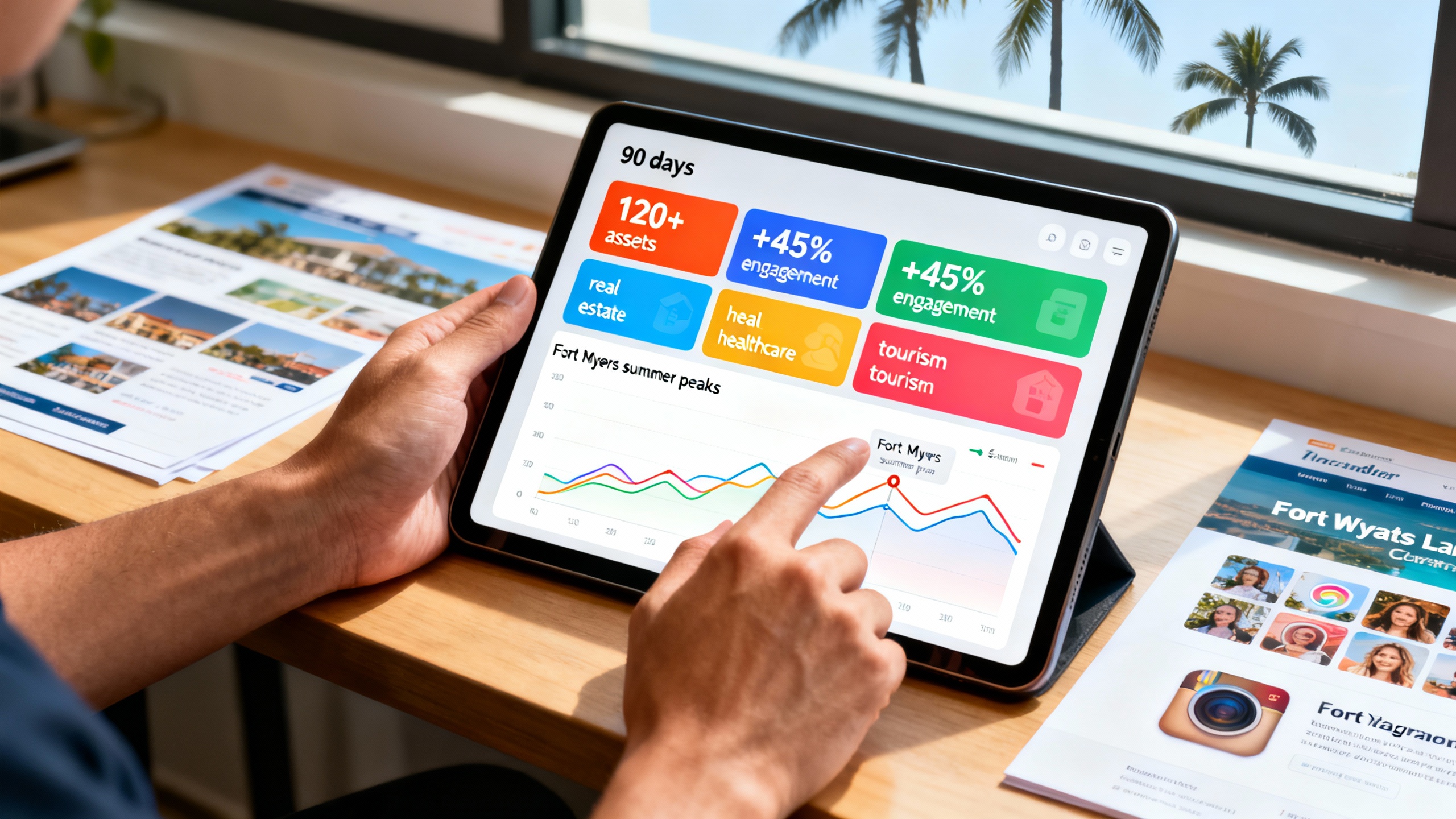



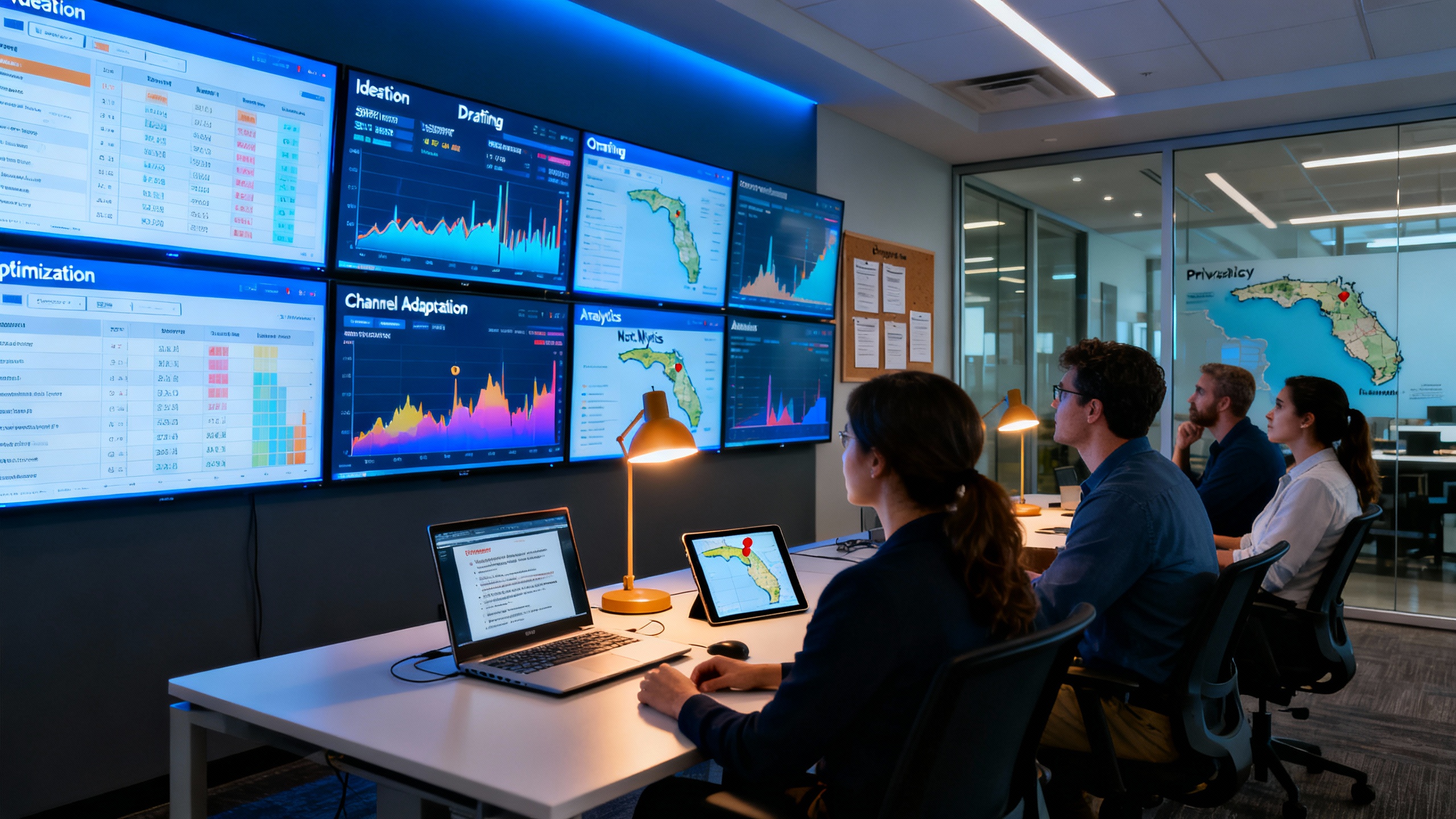
Ninety days. That's all EZWAI.com needed to prove that autonomous AI agents can run a full-funnel content marketing engine—idea to analytics—without grinding teams into the dust. Based in Fort Myers, Fl., the firm stitched together a living pipeline that drafted, edited, optimized, published, and measured content across channels while staying compliant with Florida's new privacy regime. The outcome wasn't incremental. It was decisive—and measurable.
What follows isn't theory or a breathless product pitch. It's the operating blueprint of a real deployment: the architecture, the cadence, the snags, the wins, and the numbers that matter. If you're building AI Agents in Fort Myers, Fl., or you're on the hook for pipeline performance anywhere along the Gulf Coast, this is the playbook you'll end up borrowing from—whether you mean to or not.
And yes, the agents made mistakes. They also learned. The point isn't perfection; it's compounding velocity with discipline.
How the autonomous pipeline worked (and where it broke)
EZWAI.com orchestrated a constellation of AI Agents, each with a specific charter: ideation, research, drafting, SEO–AEO optimization, channel adaptation, and analytics. The drafting agent ran large-context NLG tuned for industry voice—real estate, healthcare, hospitality—while a separate ranking agent handled schema markup, entity linking, and search intent alignment across both SEO and AEO (answer engine optimization).
The Technical Stack
The stack leaned on GPT-5 class language models for generation, backed by proprietary engagement prediction models trained on historical performance from Southwest Florida accounts. Google Analytics and HubSpot sat downstream for attribution; Facebook and LinkedIn APIs carried distribution; a consent manager enforced Florida Privacy Protection Act (FPPA) rules.